The order I tend to work in.
It's the same six steps I'd use on any business problem, this time on a category I'd barely touched before. The tag on each step is the part of my skill set it leans on.
A review flagged a margin metric sliding month after month. I wrote down a few reasons it might be doing that and tested each one. The one I expected (a handful of big players dragging down the whole pool) didn't hold up, so I ruled it out as the cause and built partner type into the scan along with other conditions, so it doesn't push the same fix on everyone.
Reps get dozens of automated cases thrown at them every day with no context, so they learn to ignore them. Before any of mine went out I sat down with the regional manager to make sure he personally asked three of his reps to prioritize those cases, and with the content team manager to agree the format of the page audits and make sure her team had the capacity to take them, so my cases didn't join the pile nobody reads.
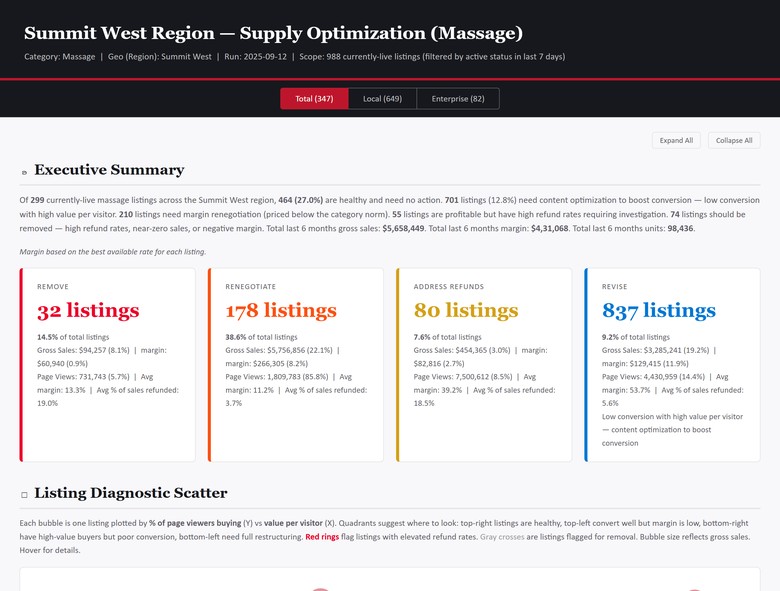
I built the scan that scores every listing against its peers in the same market and category, so an underperformer shows up next to the listings it's actually comparable to, not against the whole region.
The scan flags four groups. Two are in scope here, each down its own track: the ones making us too little per view, and those converting below their peers. The other two are out of scope, handled by separate tasks: a beyond-redemption group to cut, and one with a refund problem to chase down.
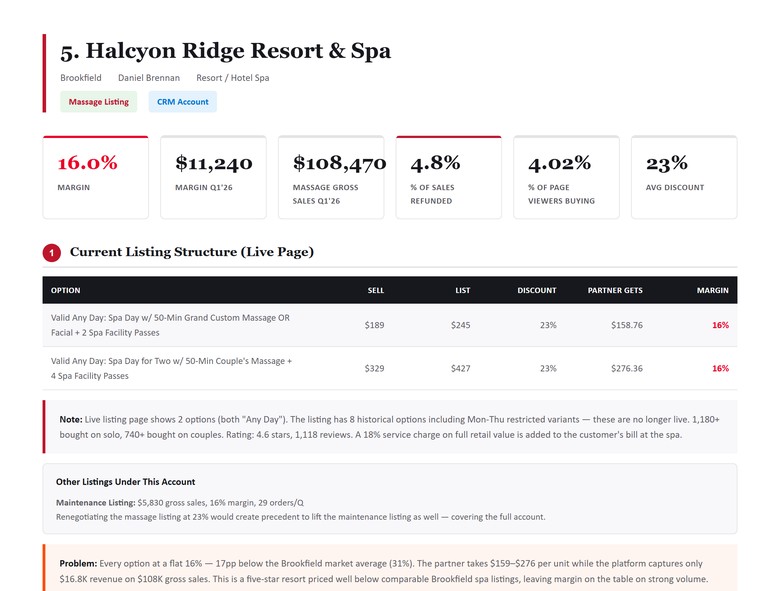
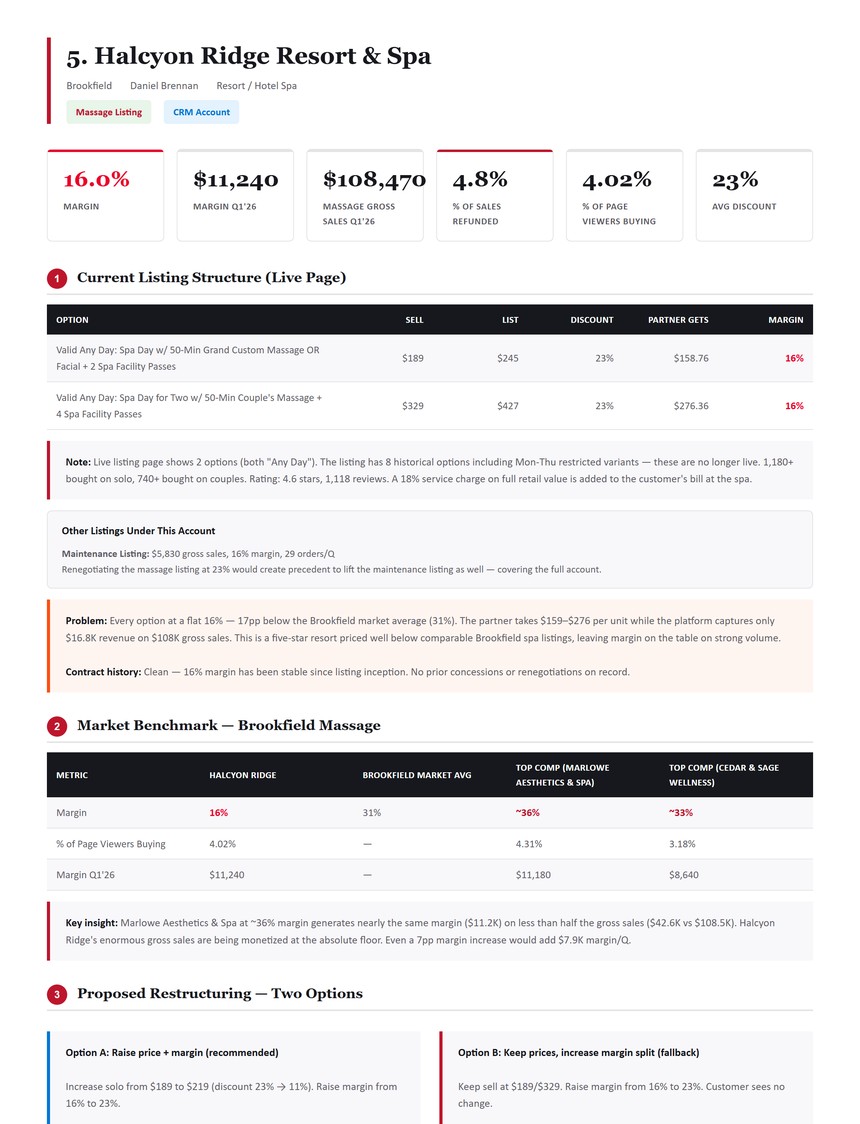
The SQL is written by AI inside a Keboola transformation, an interface I know well, and I read it before it runs. I checked the methodology with a principal analyst who'd built things like this before. What comes out the other end is a full memo per partner, detailed enough that a rep can walk straight into the room with it.
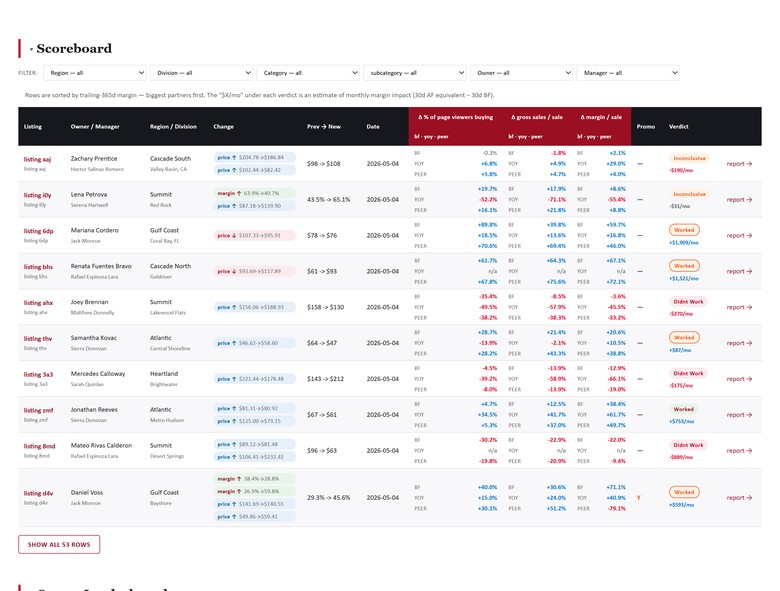
The change audit waits 30 days for clean before-and-after data, then reports whether the margin fixes held. Anything sooner is just noise when the effect takes weeks to show up. The conversion track I didn't need to build; the content team already tracks their own pages at 30 days. The loop is in the design from day one, so the measured before-and-after is the next checkpoint.